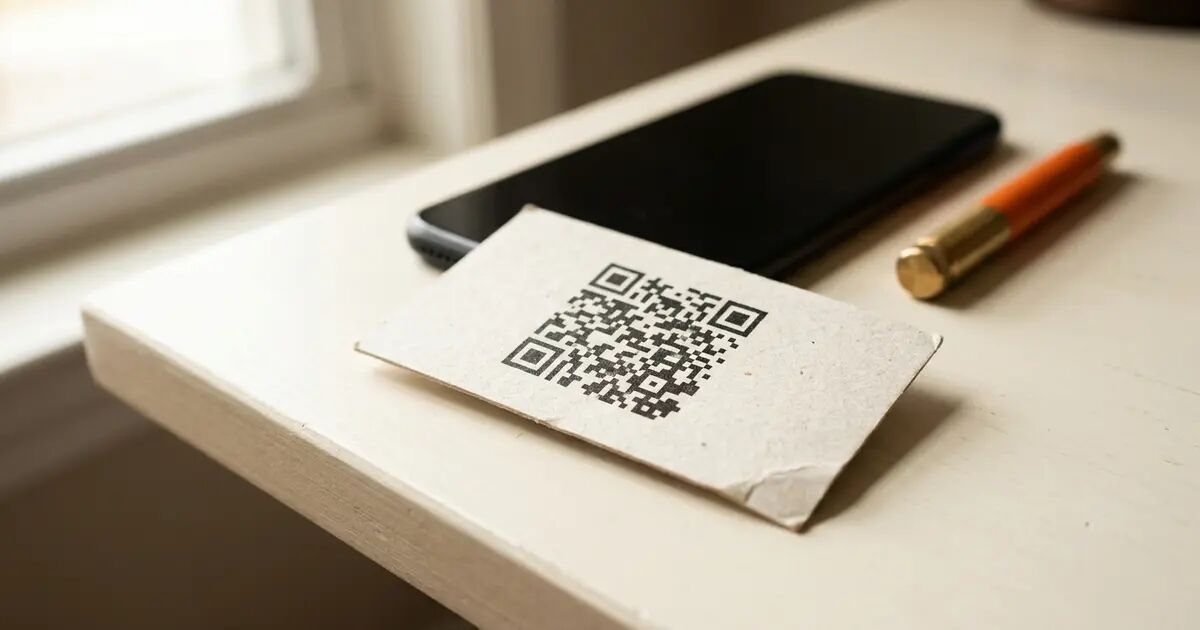
Static QR codes never expire. The data is baked into the pattern itself, like text on a printed page. Dynamic QR codes rely on a redirect service, and many generators deactivate them when a trial ends or a subscription lapses. The code doesn't break. The service behind it does.
Can a static QR code expire?
No. The QR code standard (ISO/IEC 18004) defines how data encodes into a grid of dark and light dots. It contains no concept of expiration. No timer, no validity window.
A static code holds the destination URL inside the pattern itself. Scan it in 2026 or in 2036, and the same bytes read out. The pattern is as permanent as the surface it's printed on.
But the destination has to exist. A static code pointing to a deleted webpage still scans perfectly fine. It just lands nowhere. Pew Research found that 25% of all webpages posted between 2013 and 2023 had disappeared by October 2023. Static codes don't expire, but their destinations rot.
When do dynamic QR codes stop working?
Dynamic codes point to a short redirect URL controlled by the QR generator. When someone scans, the redirect forwards them to your actual destination. You can change that destination anytime without reprinting.
If the generator shuts off that redirect, the code stops working even though the printed pattern is perfectly intact.
The most common trigger is a free trial expiring. Uniqode disables trial codes automatically after 14 days. QR Code Generator runs the same 14-day window, then deactivates any code that doesn't convert to a paid plan. The timing is brutal: 14 days is long enough to design materials, approve a print run, and distribute. By the time the codes go dark, they're already on desks and in wallets.
Subscription cancellations hit harder because they affect codes you've been using for months. QR TIGER's FAQ is blunt: "If your plan expires, it will stop working." QR Code Generator's help center warns that cancellation deactivates all codes on the account and "this action cannot be undone once confirmed."
Then there's company risk. A smaller generator that shuts down takes every redirect URL with it.
(Policies verified July 2026 against each platform's help documentation.)
What is the "QR ransom" problem?
Someone creates a dynamic code during a free trial, prints it on flyers or business cards, and gets an email weeks later: the code stops working unless they pay.
Reddit's r/assholedesign and r/graphic_design subreddits have threads about this spanning 2021 through 2025. One user printed 300 business cards before discovering the 14-day trial limit. Others describe codes being "held hostage" until they subscribed. It's a legal business model, technically. But when someone discovers their printed marketing materials are dead and the only fix is a monthly subscription they didn't budget for, "legal" isn't the word they reach for.
Not every generator operates this way. ME-QR keeps free codes live with ads. Flowcode keeps codes scanning after cancellation, though its terms reserve the right to redirect archived codes to its own site. QRCode Monkey offers only static codes for free, which are permanent by definition but can't be edited.
The generators with the biggest ad budgets and the highest search rankings tend to have the most aggressive deactivation policies. Worth checking before you send anything to the printer.
What actually kills a QR code?
Most of the time, "expiration" isn't even the right word.
-
The destination URL died. Link rot is the quiet killer. Pew Research documented that 25% of a decade's webpages had vanished, and Ahrefs found that 66.5% of links to sites over nine years were dead. For static codes, a dead destination means a code that scans but goes nowhere.
-
The generator pulled the redirect. This only affects dynamic codes, and the code itself still scans fine. The problem is entirely on the server side.
-
Physical damage. A scratched, faded, or partially covered code can fail. Error correction handles minor damage, but a code printed too small for its scanning distance fails on physics. (How big can a logo be on a QR code?)
-
Bad contrast. A dark code on a dark background won't scan regardless of age. Color contrast is the most common design-stage mistake in QR codes. (What scans and what doesn't)
-
Outdated static data. A WiFi code with last year's password scans fine and connects to nothing. Static codes can't be edited after creation. Any change means a new code and a new print run.
How do you keep a QR code working after print?
For static codes: control the destination. Use a domain you own, not a shortened URL from a third-party service that might disappear. If you're linking to a social media page, accept that the link may break and you can't fix it without reprinting.
For dynamic codes: the question is what happens when you stop paying. I checked seven major generators' cancellation policies for this article. Four of them (QR Code Generator, QR TIGER, Uniqode, Beaconstac) deactivate dynamic codes when a subscription ends. Two (ME-QR, Flowcode) keep codes scanning, with caveats. One (QRCode Monkey) only offers static codes for free.
Before printing, read the cancellation policy. Not the marketing copy. The help center FAQ titled "What happens if I cancel?" That page tells you more about a QR service than anything on its homepage.
QRlfy keeps dynamic codes live after a downgrade. Editing pauses, but every code you created keeps scanning and redirecting. That's what the pricing page means by "No QR ransom."
Frequently asked questions
Do QR codes expire after a certain number of scans?
No. Scanning reads the code optically, like photographing a page. The pattern doesn't degrade with use. Some free generators cap scan counts (QR TIGER caps free dynamic codes at 500 scans each), but that's a platform restriction, not something built into QR technology.
How long do printed QR codes physically last?
The code lasts as long as the material it's on. Business cards circulate for 1-2 years. Product packaging stays on shelves for months. Outdoor vinyl signage survives 3-5 years; aluminum panels, 7-15 years. If the print is legible and the destination exists, the code works.
Can I reactivate a QR code that stopped scanning?
If it's a dynamic code and the generator still exists, re-subscribing usually restores it. Most platforms keep code data for some period after cancellation. If it's a static code pointing to a dead URL, there's no recovery. You need a new code with a working destination.
Do free QR codes expire?
It depends on the type. Free static codes from generators like QRCode Monkey are permanent. Free dynamic codes carry the risk: most generators disable them after a trial period, impose scan caps, or layer in ads. Read the terms before you commit to a print run.
What's the safest type of QR code for printed materials?
Dynamic, from a service you trust. Static codes can't expire, but you also can't update them if the destination changes or breaks. Dynamic codes let you swap the link without reprinting and track who scans. Choose the service carefully. The QR technology itself is solid.